

Business |
How to Recover Unpaid Invoices in Singapore (Step by step)

You sent the invoice, the delivery was completed, and the payment term in your contract says “14 days.” Then the client goes quiet, no reply to your email, no response to your follow-up message. For many Singapore businesses, that silence quickly becomes a cash flow problem.
When money is overdue, the next step is not always obvious, especially if the debtor raises a dispute or keeps asking for more time. In Singapore, recovery for unpaid invoices depends the amount owed, the contract terms, and whether the claim falls within the Small Claims Tribunals or needs formal legal action. Before you decide what to do, it helps to understand your rights and the usual recovery path.
How to Recover Unpaid Invoices in Singapore
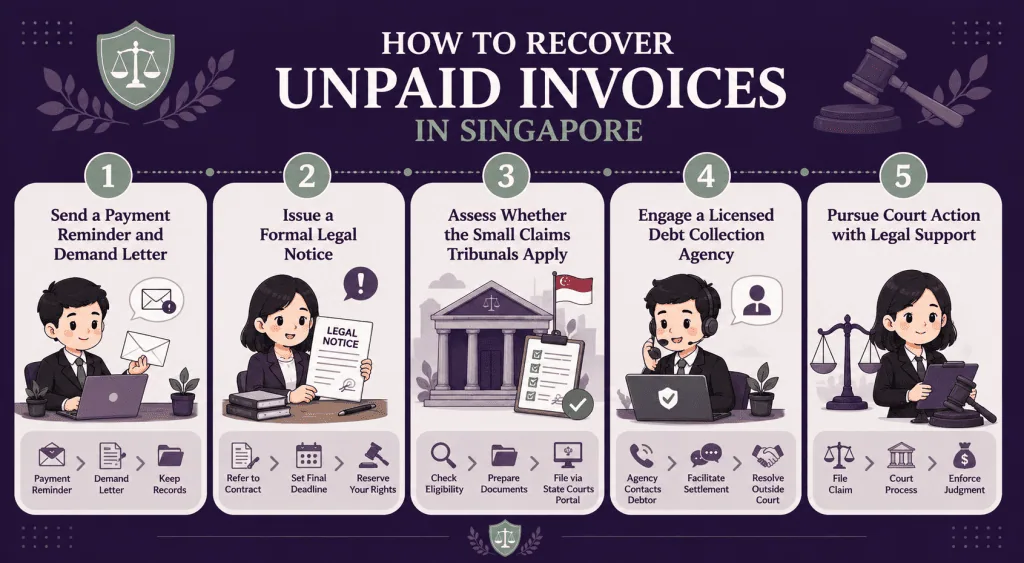
Step 1: Send a Payment Reminder and Demand Letter
The first step is a clear, written payment reminder. Start with a polite email that states the invoice number, amount due, original due date, and a new payment deadline. If there is no response, follow up with a firmer demand letter. Keep the tone professional and factual throughout.
If your contract already includes late payment charges or dispute procedures, refer to those clauses directly. This strengthens your position and creates a paper trail that supports you if the matter escalates. Save every email, message, and call note — these records matter later.
If the debtor claims the invoice is wrong, ask them to put the dispute in writing. Avoid going back and forth across multiple channels. A documented dispute history makes it easier to assess whether the issue is genuine and how to respond.
Step 2: Issue a Formal Legal Notice
If reminders do not produce payment, the next step is a formal legal notice. This is more serious than a demand email — it tells the debtor that legal proceedings may follow if payment is not received by a stated deadline.
The notice should identify the debt clearly, refer to the contract or invoice, state the overdue amount, and set a firm final date for payment. It should also reserve your right to claim interest, costs, and legal fees where the contract or law allows. A solicitor’s letter at this stage often prompts faster action because it signals the matter is now being handled formally.
Under Singapore law, only threaten action you actually intend to take. The notice should be accurate, consistent with the facts, and drafted carefully — especially if the debtor has raised a counter-dispute.
Step 3: Assess Whether the Small Claims Tribunals Apply
Before filing anywhere, check whether your claim qualifies for the Small Claims Tribunals (SCT). The SCT is administered by the Singapore State Courts and offers a faster, lower-cost process for eligible disputes. Not every invoice claim qualifies, so you need to verify the current monetary limits and eligible claim types before proceeding.
If your claim falls within SCT jurisdiction, gather your supporting documents, contract, quotation, invoice, delivery records, and payment reminders, and file through the State Courts portal. You can refer to the State Courts of Singapore — Small Claims Tribunals for current filing requirements and procedures.
If the invoice amount exceeds the SCT limit, or the debtor has raised a complex defence, court proceedings with legal representation will likely be the more appropriate route.
Step 4: Engage a Licensed Debt Collection Agency
If you are not ready for court action, a licensed collection agency can be a practical middle step. This works best when the debtor has gone quiet, keeps promising payment without following through, or appears willing to settle but has not done so.
A reputable agency will review your invoice, contract, and communication history, then contact the debtor through formal letters or calls. They may also help facilitate settlement discussions if the debtor responds. Collection agencies are generally most effective for debts with clear documentation and no active legal dispute.
This option can save time compared to litigation, but it does not replace legal advice when the dispute is substantial or enforcement is likely to be needed.
Step 5: Pursue Court Action with Legal Support
If all earlier steps have failed, court proceedings may be the only remaining option. This is most appropriate for larger debts, disputed claims outside SCT scope, or situations where the debtor is clearly avoiding payment despite formal notices.
Court action in Singapore typically involves filing a claim, serving documents on the debtor, and proceeding through the relevant court process depending on the amount and nature of the claim.
Legal fees and disbursements will apply, and timelines can extend to several months. However, a court judgment gives you enforceable rights, including options to pursue the debtor’s assets if they still do not pay.
For this stage, engaging a Singapore-qualified lawyer is essential. RBN Chambers can advise on the right approach, draft the necessary documents, and represent your interests throughout the process.
Also Read: Frustration of Contract in Singapore: Comprehensive Guide
Choosing the Right Debt Recovery Method in Singapore
The best approach depends on the size of the debt, the strength of your documents, and how the debtor is behaving. Moving too quickly can cost more than the debt is worth. Waiting too long can weaken your position.
| Recovery Method | Best For | Estimated Cost |
|---|---|---|
| Payment reminder and demand letter (same day to 1 week) | Small to medium debts that are clearly overdue | Low, internal admin or legal drafting fees |
| Formal legal notice (3 days to 2 weeks) | Debts where the debtor is delaying or ignoring reminders | Moderate, depending on solicitor involvement |
| Small Claims Tribunals (several weeks to a few months) | Lower-value claims within SCT limits | Relatively low filing and preparation costs |
| Debt collection agency (days to several weeks) | Clear debts with no active dispute | Contingency-based or fixed service fee |
| Court proceedings (several months or longer) | Larger or disputed debts outside SCT scope | Higher, due to legal fees and disbursements |
What to Do If the Debtor Raises a Dispute
A disputed invoice does not automatically mean you cannot recover. It does mean you need to assess the claim carefully before escalating.
Ask the debtor to put their dispute in writing and be specific — which part of the work is disputed, what documents they rely on, and what amount they believe is correct. Then compare their position against your contract, quotation, delivery records, and any sign-off or acceptance correspondence.
If the dispute is minor or factual, you may be able to resolve it quickly with the right documents. If it is more complex, particularly where the contract value is significant or liability is in question — seek legal advice before your next communication. What you say at this stage can affect your recovery options later.
Can You Claim Interest on an Overdue Invoice?
You may be able to claim interest on late payments, but it depends on what your contract says and what the law allows. If your agreement includes a late interest clause, that rate typically applies. If there is no contractual rate, you may still be able to claim interest through court proceedings under applicable Singapore rules.
Before you demand interest, check your contract and seek legal advice. Claiming the wrong rate or basis can complicate negotiations and affect how your position is perceived if the matter goes to court.
How Long Do You Have to Recover an Unpaid Invoice in Singapore?
Time limits apply to debt claims in Singapore. If you delay too long, you may lose the right to pursue the debt at all. The relevant limitation period depends on the type of claim and how the debt arose, so it is important to check this early, especially for older invoices.
If you are unsure whether a time limit has already begun to run, get legal advice before taking any step that might affect your position. You can also refer to Ministry of Law Singapore for general guidance on dispute resolution and legal processes.
Also Read: Contract Disputes in Singapore: A Practical Guide to Your Legal Options
Speak to a Singapore Debt Recovery Lawyer at RBN Chambers
You do not need a lawyer for every overdue invoice. A firm demand letter and a clear paper trail can resolve many straightforward debts without legal involvement. However, you should seek legal advice when the debt is high value, the debtor has raised a dispute, the documents are unclear, or you are considering court action.
Involving a lawyer early can also prevent costly mistakes, such as sending a poorly worded notice, making a concession in writing, or missing a procedural step that affects your claim.
RBN Chambers advises Singapore businesses on commercial debt recovery, from initial demand letters through to court proceedings and enforcement. If you are dealing with an overdue invoice and are not sure of your next step, contact us for a practical assessment of your position.
Frequently Asked Questions
How long do I have to recover an unpaid invoice in Singapore?
Time limits apply depending on the claim type and how the debt arose. Check early and seek legal advice if the invoice is already old, as delays can affect your right to recover.
Can I claim interest on late invoice payments in Singapore?
You may be able to claim interest if your contract provides for it or if the law allows it. Check your agreement and get legal advice before demanding interest.
What happens if the debtor ignores a formal legal notice?
You may proceed to the next recovery step, filing an SCT claim if the debt qualifies, engaging a collection agency, or starting court action with a lawyer.
Can I use the Small Claims Tribunals for any unpaid invoice in Singapore?
No. The SCT only covers certain claim types within specific monetary limits. Confirm that your dispute falls within the SCT’s jurisdiction before filing through the State Courts portal.
Delivering Solutions not just Answers to your legal disputes
We provide solutions to all our clients regardless of the scale or complexity of the cases. Let us know how we can help.
Contact UsAny information of a legal nature in this blog is given in good faith and has been derived from resources believed to be reliable and accurate. The author of the information contained herein this blog does not give any warranty or accept any responsibility arising in any way, including by reason of negligence for any errors or omissions herein. Readers should seek independent legal advice.