

General |
What is a Statement of Claim? A Guide to Drafting and Filing

Filing a lawsuit in Singapore isn’t just about notifying someone that they’re being sued — it’s about laying out, in writing, exactly why.
That’s the job of a Statement of Claim. It’s the pleading that sets out the background facts, the specific allegations against the defendant, and the relief the claimant is seeking, and it forms the foundation the rest of the case is built on.
Whether you’re the one bringing a claim or the one responding to one, understanding what goes into this document, and what happens if it’s done poorly, matters from day one.
What is a Statement of Claim?
A Statement of Claim is a document filed along with an Originating Claim—or in most cases, together with a Writ of Summons—by an individual or entity intending to sue another party. It sets out the background facts, the key allegations, and the relief or remedies being sought.
A well-drafted Statement of Claim is essential to a successful litigation strategy, as it lays the foundation for the claimant’s case and informs the defendant of the case they are required to answer.
Essential Components of a Statement of Claim
A Statement of Claim typically consists of four components.
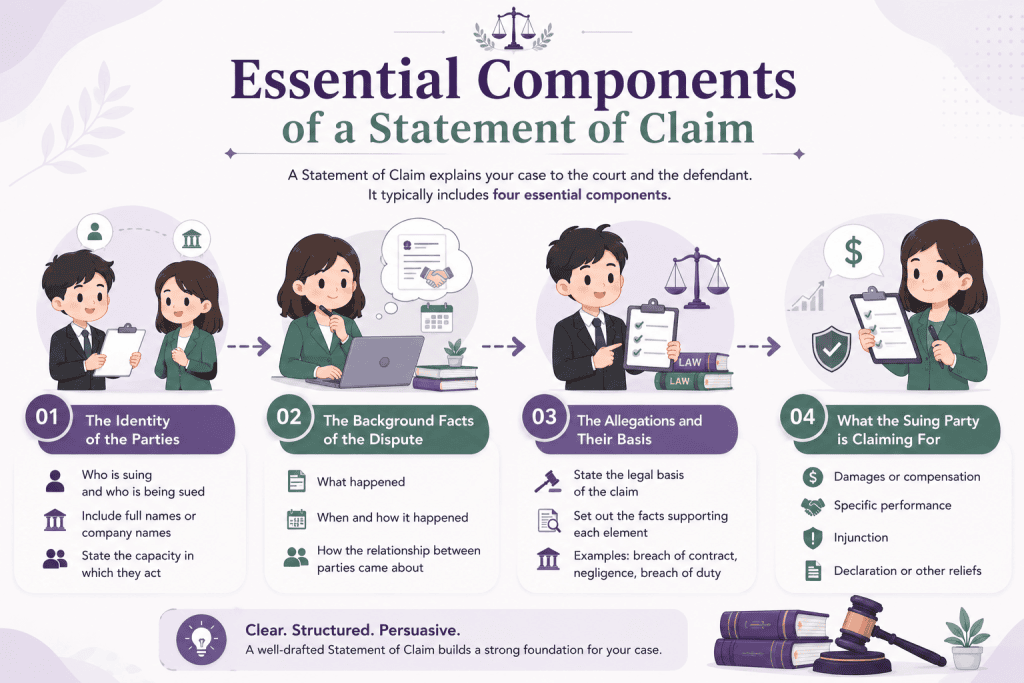
1. The Identity of the Parties
The pleading identifies the claimant and defendant clearly, including their capacity where relevant, such as whether a party is suing or being sued as an individual, a company, or in a representative capacity.
2. The Background Facts of the Dispute
This sets out the factual narrative, what happened, when, and how the relationship between the parties came about, such as through a contract, transaction, or incident.
3. The Allegations and Their Basis
Here, the claimant states the specific cause of action, such as breach of contract, negligence, or breach of statutory duty, and the facts supporting each element of that claim.
4. What the Suing Party is Claiming For
This sets out the reliefs sought, which may include damages, specific performance, an injunction, or a declaration, depending on the nature of the dispute.
Statement of Claim vs Originating Claim
Many people confuse these two documents, but they serve different purposes.
| Originating Claim | Statement of Claim |
|---|---|
| Starts the legal proceedings. | Explains the detailed facts and legal basis of the claim. |
| Identifies the parties involved. | Sets out the allegations against the defendant. |
| Commences the lawsuit. | Defines the issues that will be decided by the court. |
Under the Rules of Court 2021, an Originating Claim has largely replaced the former Writ of Summons as the document used to commence most civil actions in Singapore.
Timelines and Deadlines for Filing and Serving
If the Statement of Claim isn’t filed together with the Originating Claim, it generally must be served within 14 days of the Originating Claim being served. Missing this deadline can affect the progress of the case, so timing should be planned from the outset rather than treated as an afterthought.
A Statement of Claim can usually be amended after filing, either with the other party’s consent or with the court’s leave, though amendments made later in proceedings tend to face more scrutiny than early ones. If the document isn’t served within the required timeframe, the claimant risks the claim being dismissed or struck out.
Also Read: Letter of Administration Singapore: A Complete 2026 Guide
Serving a Statement of Claim Out of Jurisdiction
Where the defendant is located outside Singapore, service takes longer and follows a different process than service within Singapore. For an Originating Claim served overseas, reasonable steps to effect service are generally required within 28 days, compared with 14 days for service within Singapore, and the Statement of Claim served together with it follows the same extended timeline.
Serving documents on a defendant abroad may also require compliance with the rules of the foreign jurisdiction, which can add further time and complexity. This is one of the more common areas where claimants without legal representation run into procedural difficulty, since an improperly served claim may need to be served again from scratch.
Filing Fees for a Statement of Claim in Singapore
A Statement of Claim is typically filed together with the Originating Claim, and the applicable fee generally follows the fee payable for commencing the claim itself, which depends on the court hearing the matter and the value of the claim. Claims of a higher value, or those filed in the General Division of the High Court rather than the State Courts, generally attract higher fees.
Since court fee schedules are updated from time to time, it’s worth checking the current fee schedule on the Singapore Courts or eLitigation website before filing, or having your lawyer confirm the applicable amount as part of preparing your claim.
What Happens After the Statement of Claim Is Served?
Once the defendant receives the Statement of Claim, they will typically:
- Review the allegations.
- Prepare and file a Defence.
- Raise any Counterclaim if applicable.
- Proceed to case management and subsequent stages of litigation.
The litigation will then move through document exchange, evidence gathering, and eventually trial or settlement discussions.
Importance of Accurate and Effective Drafting
The quality of a Statement of Claim can significantly influence the progress of a case. An incomplete or poorly drafted pleading may:
- Create uncertainty about the issues in dispute.
- Lead to unnecessary amendments.
- Increase legal costs.
- Delay court proceedings.
- Weaken the claimant’s position during litigation.
Conversely, a well-structured Statement of Claim enables the court and all parties to clearly understand the dispute from the outset, helping the proceedings progress more efficiently.
Given the legal and procedural requirements involved, many claimants choose to seek legal advice before commencing court proceedings.
Also Read: Limitation Act in Singapore: Key Time Limits & Deadlines
Get Your Statement of Claim Right the First Time at RBN Chambers
Getting a Statement of Claim right isn’t just a formality, it shapes how the rest of your case unfolds, from how quickly the defendant can respond to how exposed your claim is to a striking out application. A pleading that’s clear, properly framed, and served on time gives your case the strongest possible starting point.
RBN Chambers advises clients on drafting, reviewing, and responding to Statements of Claim as part of our civil litigation and commercial litigation practice. If you’re preparing to file a claim, or have just been served with one, get in touch with our team to discuss your matter and the best way forward. Contact us here!
Frequently Asked Questions
How long do I have to file a Statement of Claim?
If it isn’t filed together with the Originating Claim, it generally must be served within 14 days of the Originating Claim being served.
Can I amend a Statement of Claim after filing?
Yes, either with the other party’s consent or with the court’s leave, though amendments made later in the proceedings are subject to greater scrutiny.
What happens if the Statement of Claim is not served?
The claim may be at risk of being dismissed or struck out, so timely service is essential to keeping the case on track.
Is a Statement of Claim the same as a Writ of Summons?
Not quite. Under the current Rules of Court 2021, a Writ of Summons has largely been replaced by the Originating Claim as the document that commences a lawsuit. The Statement of Claim is filed alongside it either way, setting out the facts and relief sought — the terminology around the commencing document has simply changed.
What happens if I ignore a Statement of Claim served on me?
Ignoring it doesn’t make the claim go away. If you fail to respond within the required timeframe, the claimant can apply for a default judgment against you, meaning the court may decide the case in the claimant’s favour without hearing your side.
Do I need a lawyer to draft a Statement of Claim?
It’s not a strict legal requirement, but a Statement of Claim carries real legal weight, and errors in how it’s drafted can affect the entire case. Many claimants engage a lawyer to make sure the facts, causes of action, and reliefs sought are properly and persuasively set out.

Delivering Solutions not just Answers to your legal disputes
We provide solutions to all our clients regardless of the scale or complexity of the cases. Let us know how we can help.
Contact UsAny information of a legal nature in this blog is given in good faith and has been derived from resources believed to be reliable and accurate. The author of the information contained herein this blog does not give any warranty or accept any responsibility arising in any way, including by reason of negligence for any errors or omissions herein. Readers should seek independent legal advice.