

General |
Tort Claims in Singapore: What to Do When Someone’s Negligence Harms You
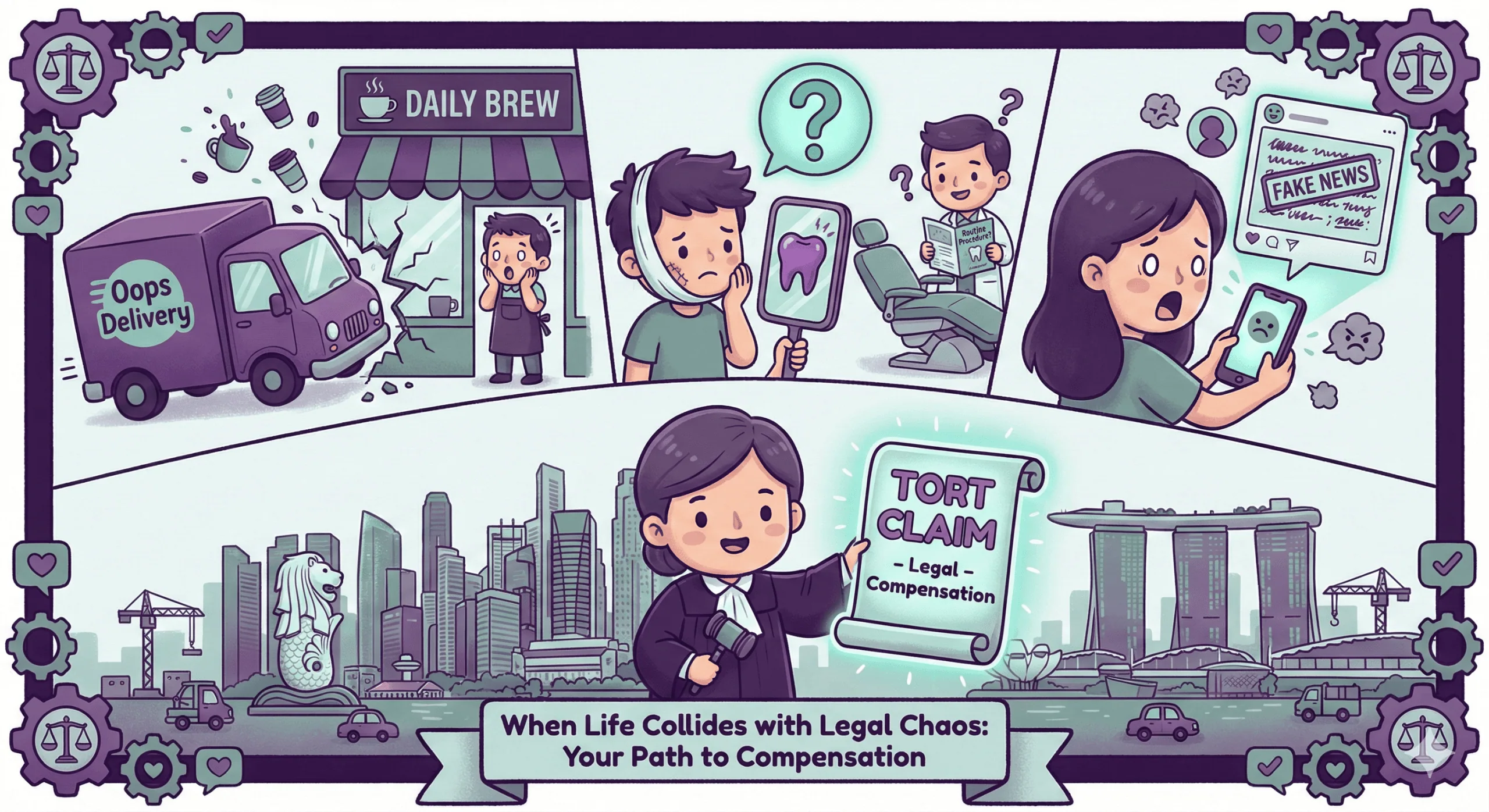
It happens when you least expect it. One minute you’re sipping your morning coffee, the next you’re watching a delivery truck redecorate your shopfront in a style you definitely didn’t order. Or perhaps you’re dealing with mysterious aches that your “routine” dental procedure somehow forgot to mention in the brochure. Maybe someone’s decided to make you internet-famous for all the wrong reasons with a scathing (and false) social media post.
Welcome to the not-so-fun side of adulting, where everyday life occasionally collides with legal chaos.
Here’s the good news: when someone’s carelessness or worse, their intentional mischief causes you harm, the law has your back. Enter the tort claim, which is essentially the legal system’s way of saying “someone messed up, and you deserve compensation.”
In Singapore, these situations pop up more often than you would think. The secret? Knowing your rights early isn’t just smart, it’s your best defence for preserving evidence and keeping all your options on the table.
What is a tort claim?
A tort claim is a civil action brought by someone who has suffered loss or injury because of another person’s wrongful conduct. Singapore’s tort law covers various wrongs including negligence, nuisance, trespass, defamation, and intentional damage, with a general limitation period of three to six years from when the cause of action arises.
Tort law in Singapore is primarily developed through case law, with procedural and time limits governed by statutes such as the Limitation Act 1959 (Cap. 163).
Common Scenarios That Give Rise to Tort Claims
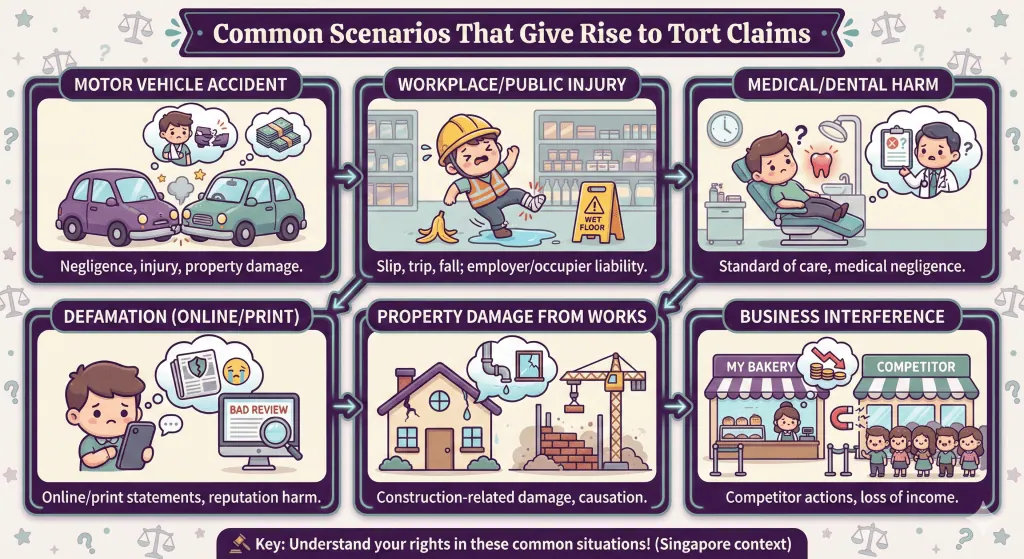
Tort claims arise more frequently than most people expect. Here are typical situations:
| Scenario | What typically happens |
| Motor vehicle accident | When a driver’s negligence causes injury or property damage, the injured party may pursue a claim. Insurance companies often become involved, and disputes over fault are common. |
| Workplace or public injury | Slip, trip, or fall incidents at shops, construction sites, or other premises can trigger claims based on employer or occupier liability. These cases often involve questions about whether proper safety measures were in place. |
| Medical or dental harm | When medical treatment results in unexpected harm, questions arise about whether the healthcare provider met the required standard of care and whether their actions caused the injury. Medical negligence claims often require expert evidence, and early preservation of medical records is essential. |
| Defamation online or in print | Damaging statements made online, in print, or verbally can harm personal or business reputations. In Singapore, defamation claims have a six-year limitation period from the date the defamatory statement was published, and urgent action may be needed to prevent continued publication. |
| Property damage from works | Nearby construction work can cause structural damage, water leaks, or other harm to residential or commercial properties. These claims often involve complex questions of causation and liability. |
| Business interference | When a competitor’s or neighbour’s actions cause loss of customers or income, this may constitute actionable business interference or other economic torts. |
Critical Time Limits You Must Know
Understanding limitation periods is crucial, as different types of tort claims have different deadlines under the Limitation Act:
- General tort claims (negligence, trespass, nuisance): Six years from the date the damage or loss occurred
- Personal injury claims: Three years from the date of injury, or three years from when you first had the required knowledge of the injury, whichever is later
- Defamation claims: Six years from the date of publication
- Latent damage claims: Three years from discovery of the damage, with an overriding long-stop limit of 15 years from the act that caused the damage
These deadlines are strict, and failing to commence proceedings in time can result in your claim being time-barred, regardless of its merits. There are limited exceptions—for instance, when fraud or concealment is involved, or when the claimant was under a legal disability.
Legal remedies in Singapore
There are both informal and formal ways to resolve a tort claim.
Negotiation and settlement. Parties can reach a private agreement at any time, often with payments and releases. Best when both sides want to avoid time and cost of court, or where insurance is involved.
Mediation. A neutral mediator helps the parties find common ground. Mediation suits disputes where relationships or confidentiality matter, and it can be quicker and less costly than litigation.
Litigation in State Courts or High Court. Going to court seeks a judgment for damages or an injunction. This is suited to contested, high‑value or precedent issues, and when other routes fail.
Protective orders and injunctions. Court orders can stop ongoing harm, for example to prevent further defamatory publication or continued trespass. Useful when immediate prevention is needed.
The right remedy depends on the situation.
Why early legal advice matters
People delay for many reasons, including uncertainty and hope the problem will resolve. Timing matters for clear reasons.
Evidence deteriorates over time. Witnesses’ memories fade, documents get lost, and physical evidence can disappear. Early action helps preserve crucial proof.
Statutory deadlines are unforgiving. The Limitation Act imposes strict time limits, and missing these deadlines can permanently bar your claim, regardless of how strong your case might be.
Early intervention can reduce costs. Addressing issues promptly often prevents escalation and allows for negotiation or interim protection before positions harden and costs mount.
Peace of mind about your options. Understanding your legal position early allows you to make informed decisions about how to proceed, rather than reacting under pressure.
Early advice often prevents bigger problems, and gives peace of mind about options and likely outcomes.
How RBN Chambers can help you
Tort claims are fact-intensive and require careful navigation of both substantive law and procedural requirements. Experienced legal counsel can:
Assess your claim’s strength based on the specific facts and applicable legal principles
- Identify and preserve critical evidence before it becomes unavailable
- Navigate limitation periods to ensure claims are filed within required timeframe
- Handle negotiations with opposing parties and their insurers
- Explore alternative dispute resolution options like mediation
- Represent you in court proceedings if litigation becomes necessary
- Seek protective orders when immediate action is needed to prevent ongoing harm
Frequently Asked Questions about Tort Claims
How long do I have to start a tort claim in Singapore?
Time limits vary by type of harm, and the Limitation Act applies. Some claims have a six year period for damage, while personal injury claims can have shorter periods. Get advice early to confirm your deadlines. See official guidance at sso.agc.gov.sg.
Can I claim for medical negligence in Singapore?
Yes, if you can show the medical professional breached the required standard of care and this caused your injury. Claims often need expert evidence, and early preservation of records is important.
What if the person at fault has no insurance?
You can still bring a tort claim directly against the person, but recovery may depend on their assets. Early legal advice helps assess enforcement options, and whether interim orders are available.
Is mediation mandatory for tort disputes?
Mediation is encouraged, and courts may require parties to consider it, but it is not always mandatory. Many disputes settle through mediation, saving time and cost compared with full litigation.
Can I get an injunction to stop ongoing harm?
Potentially, yes. Courts can grant interim or final injunctions to prevent continuing damage, such as stopping defamatory publications or trespass. Urgent applications require persuasive evidence of risk and balance of hardship.
Delivering Solutions not just Answers to your legal disputes
We provide solutions to all our clients regardless of the scale or complexity of the cases. Let us know how we can help.
Contact UsAny information of a legal nature in this blog is given in good faith and has been derived from resources believed to be reliable and accurate. The author of the information contained herein this blog does not give any warranty or accept any responsibility arising in any way, including by reason of negligence for any errors or omissions herein. Readers should seek independent legal advice.