

General |
Contract Drafting Checklist Singapore: Essential Legal Guide

Good contracts are the foundation of every healthy business relationship. For Singapore businesses, a well-drafted agreement does more than put terms in writing, it reduces legal risk, sets clear expectations, and gives both parties a reliable reference point if disputes arise.
Whether you are working on an NDA, employment agreement, service contract, or SaaS agreement, this checklist covers the essential elements you should not overlook.
Why Contract Drafting Matters for Singapore Businesses
Clear and well-drafted contracts help businesses reduce legal risks, define expectations, and avoid costly disputes. Whether you are preparing an employment agreement, service contract, NDA, or SaaS agreement, having a structured drafting checklist ensures important clauses are not overlooked.
For businesses operating in Singapore, contracts should also align with local laws and regulatory standards to improve enforceability and commercial certainty.
Essential Elements of a Singapore Contract
Every contract should contain core provisions that clearly explain the rights and obligations of all parties involved.
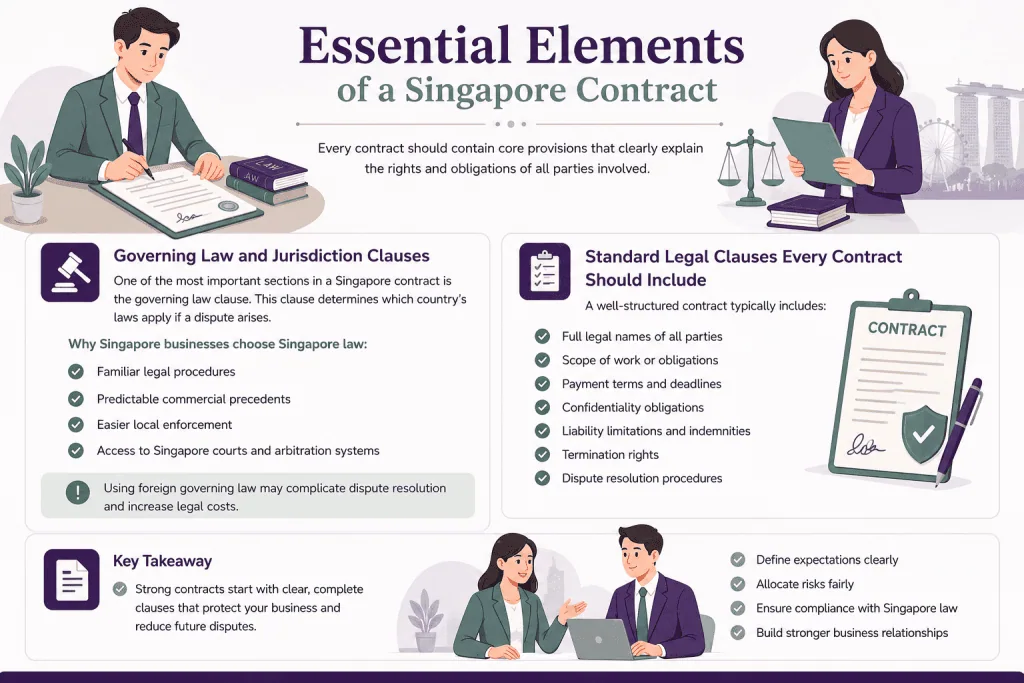
Governing Law and Jurisdiction Clauses
One of the most important sections in a Singapore contract is the governing law clause. This clause determines which country’s laws apply if a dispute arises.
Most Singapore businesses choose Singapore law because it offers:
- Familiar legal procedures
- Predictable commercial precedents
- Easier local enforcement
- Access to Singapore courts and arbitration systems
Using foreign governing law may complicate dispute resolution and increase legal costs.
Standard Legal Clauses Every Contract Should Include
A well-structured contract typically includes:
- Full legal names of all parties
- Scope of work or obligations
- Payment terms and deadlines
- Confidentiality obligations
- Liability limitations and indemnities
- Termination rights
- Dispute resolution procedures
| Contract Type | Essential Clauses | Common Pitfalls |
|---|---|---|
| NDA | Confidentiality period, exclusions | Overly broad definitions |
| Employment Agreement | Salary, job scope, termination | Non-compliance with MOM rules |
| Service Agreement | Deliverables, timelines, payment | Unclear performance expectations |
| SaaS Agreement | Subscription terms, data protection, SLAs | Weak intellectual property protections |
Employment Contract Checklist Singapore
Employment agreements in Singapore should comply with guidelines issued by the Ministry of Manpower to avoid regulatory issues.
Important Clauses to Include
An employment contract should generally contain:
- Employee details and job title
- Salary and compensation structure
- Working hours and overtime terms
- Annual leave and medical leave entitlements
- Confidentiality obligations
- Termination notice periods
- Non-compete clauses where appropriate
Clear employment terms help employers and employees understand their responsibilities from the start.
Also Read: Letter of Administration Singapore: A Complete 2026 Guide
Service Agreement Checklist
Service agreements are commonly used for freelancers, consultants, agencies, and vendors. Precise drafting helps reduce misunderstandings and scope disputes.
Key Terms for Service Contracts
A strong service agreement should cover:
- Detailed service descriptions
- Deliverables and project milestones
- Payment schedules and invoicing
- Revision or change request procedures
- Liability and warranty clauses
- Insurance requirements if relevant
Clearly defining expectations early can prevent scope creep and delayed payments later.
SaaS Contract Checklist
Software-as-a-Service (SaaS) agreements require special attention because they involve software access, recurring billing, and customer data management.
Essential SaaS Agreement Clauses
A SaaS contract should typically address:
- Subscription pricing and renewal terms
- User access restrictions
- Data privacy and cybersecurity obligations
- Service level agreements (SLAs)
- Intellectual property ownership
- Termination rights and data export procedures
Businesses handling customer data should also ensure compliance with Singapore privacy regulations.
NDA Drafting Checklist
Non-disclosure agreements (NDAs) help businesses protect confidential information during partnerships, negotiations, or commercial discussions.
What to Include in an NDA
A properly drafted NDA should contain:
- Clear definitions of confidential information
- Duration of confidentiality obligations
- Exclusions for public or previously known information
- Return or destruction of confidential materials
- Remedies for unauthorized disclosure
Overly vague confidentiality clauses may become difficult to enforce.
Contract Review Checklist: Common Red Flags
Reviewing contracts carefully before signing helps identify legal and commercial risks early.
Warning Signs to Watch For
During contract review, pay attention to:
- Undefined or ambiguous language
- One-sided liability clauses
- Missing deliverables or obligations
- Automatic renewal provisions
- Clauses which are punitive in nature
- Terms conflicting with Singapore law
Professional review becomes especially valuable for high-value or long-term agreements.
Contract Negotiation Tips
Negotiation is not only about pricing. Strong negotiations help create balanced agreements that clearly define responsibilities, reduce misunderstandings, and protect both parties from unnecessary legal or financial risk.
1. Prioritize Key Commercial Objectives First
Before negotiating smaller details, identify the most important business goals you want the contract to achieve. These may include payment security, delivery timelines, intellectual property ownership, or liability protection. Focusing on core priorities early helps prevent negotiations from becoming distracted by less important terms.
2. Use Measurable and Specific Language
Contracts should use clear and objective wording whenever possible. Instead of vague phrases like “reasonable efforts” or “timely delivery,” define exact deadlines, quantities, performance standards, or response times. Specific language reduces confusion and makes obligations easier to enforce if disputes arise later.
3. Avoid Vague Performance Obligations
Unclear obligations often create disagreements because each party may interpret expectations differently. For example, a service agreement should clearly explain what deliverables are included, how revisions are handled, and what happens if deadlines are missed. Detailed obligations help prevent future disputes about performance quality or scope.
4. Request Reciprocal Obligations Where Appropriate
Balanced contracts usually impose similar responsibilities on both parties. For example, if one party is required to keep information confidential, the other party may also need to follow the same obligation. Reciprocal clauses help create fairness and reduce the risk of overly one-sided agreements.
5. Confirm All Negotiated Changes in Writing
Verbal discussions or informal messages can easily be forgotten or misunderstood. After negotiations, ensure every agreed amendment is reflected in the final written contract before signing. This includes updated pricing, revised timelines, added obligations, or removed clauses. Written confirmation creates a reliable record if disagreements occur later.
Well-negotiated contracts often reduce disputes because expectations, responsibilities, and risk allocation are documented more clearly from the beginning.
Contract Signing Checklist Singapore
Even a well-drafted agreement can become problematic if execution procedures are incomplete.
Final Steps Before Signing
Before finalizing a contract:
- Verify signatory authority
- Ensure all pages are complete
- Confirm final amendments are included
- Use witnesses where legally required
- Store signed copies securely
Electronic signatures are generally recognized under Singapore’s Electronic Transactions Act if reliability requirements are met.
Why Professional Legal Review Matters
Template contracts downloaded online may not fully reflect Singapore legal requirements or your business risks. Professional review helps identify missing protections, compliance concerns, and negotiation opportunities.
Businesses dealing with employment matters, SaaS services, investments, or sensitive data often benefit from tailored legal drafting instead of relying solely on generic templates.
If you are unsure whether your agreement adequately protects your interests, consulting a Singapore corporate lawyer can provide clarity before signing.
Also Read: Common Mistakes in Contract Law Singapore: A Guide for Businesses
Getting Your Contracts Right From the Start with RBN Chambers
A well-drafted contract is one of the most practical investments a Singapore business can make. Taking the time to review each clause carefully, or working with a qualified legal professional — can save significant time, cost, and stress down the line. Whether you are drafting your first service agreement or reviewing a complex SaaS contract, the details matter more than most people realize.
If you need professional guidance on contract drafting or review, the team at RBN Chambers is ready to help you protect your business interests with clear, enforceable agreements tailored to Singapore law. Contact us, here!
Frequently Asked Questions
What makes a contract legally binding in Singapore?
A contract is generally legally binding when there is a valid offer, acceptance, consideration (something of value that is exchanged between the parties), and intention to create legal relations under Singapore law.
Can Singapore contracts use foreign governing law?
Yes, parties can choose foreign governing law, but this may complicate enforcement and dispute resolution for Singapore businesses.
Do employment contracts need to follow MOM guidelines?
Yes, employment contracts should comply with key requirements issued by the Ministry of Manpower regarding salary, working hours, leave entitlements, and termination.
Are electronic signatures valid in Singapore?
Yes, electronic signatures are legally recognized in Singapore under the Electronic Transactions Act when reliability requirements are satisfied.
Delivering Solutions not just Answers to your legal disputes
We provide solutions to all our clients regardless of the scale or complexity of the cases. Let us know how we can help.
Contact UsAny information of a legal nature in this blog is given in good faith and has been derived from resources believed to be reliable and accurate. The author of the information contained herein this blog does not give any warranty or accept any responsibility arising in any way, including by reason of negligence for any errors or omissions herein. Readers should seek independent legal advice.